
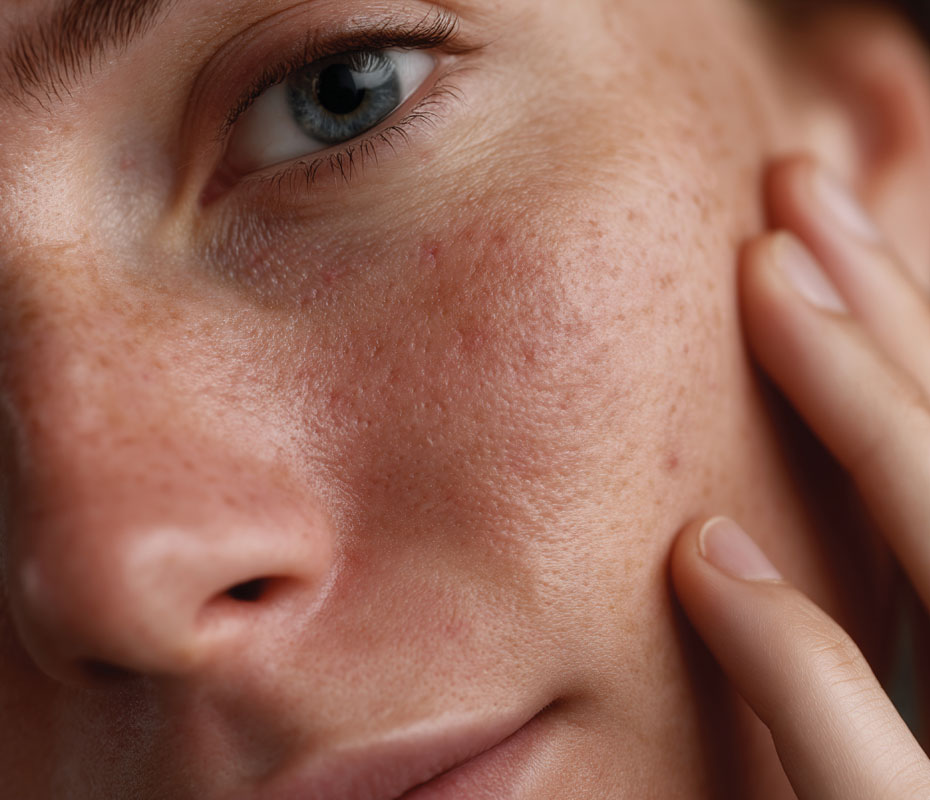
Enlarged Pores
Enlarged pores are a common skin concern where the pores appear more noticeable and larger than usual. Pores are small openings in the skin that are necessary for skin health, they release oils and sweat, which can become enlarged. It is important to cleanse your face daily to remove makeup, oil and dead skin cells and debris that can contribute to enlarged pores.
What Causes Enlarged Pores?
Several factors contribute to the development of enlarged pores, including:
- Excess Oil Production: Overactive sebaceous glands can cause pores to expand. When the skin produces more sebum than necessary, it mixes with dead skin cells and debris, clogging pores and stretching them. This can lead to an oily complexion and make pores appear more prominent due to the oily substance produced by the sebaceous glands.
- Ageing: As we age, the skin loses elasticity, which can make pores appear larger. Incorporating treatments that boost collagen, such as retinoids or peptide-rich serums, can help counteract this effect.
- Genetics: A family history of large pores can increase the likelihood of developing them. Genetic factors determine skin type and oil production levels, both of which influence pore size. Understanding your genetic predisposition can help tailor skincare routines to manage pore appearance effectively.
- Sun Damage: Ultraviolet (UV) rays can weaken collagen in the skin, making pores more noticeable. Prolonged sun exposure not only damages collagen but also reduces skin elasticity, leading to larger-looking pores. Regular use of oil-free broad-spectrum sunscreen is crucial in protecting the skin and maintaining a smoother texture. Treatments that address sun damage can also help reduce the appearance of pores larger than usual.
- Clogged Pores: Build-up of oil, dead skin cells, and dirt can stretch the pores. When pores become clogged, they expand to accommodate the excess material, resulting in larger pores. Regular exfoliation with products like glycolic acid can help prevent this build-up and keep pores clear on the skin’s surface.
- Sebaceous filaments: Some patients have a genetic predisposition to having fine, dark hairs in their pores that make the pores look more noticeable. There are specific dermatologist-led treatments that can be performed to reduce the visibility of these hairs.
- Hormonal Changes: Fluctuations in hormones, particularly during puberty, menstruation, and pregnancy, can increase oil production and enlarge pores. Hormonal imbalances can trigger excess sebum production, exacerbating pore size. Consulting with a dermatologist may provide insights into managing hormonal influences on pore appearance.
- Skin Inflammation: Skin inflammation can cause enlarged pores by disrupting the normal function of the sebaceous glands. Conditions like acne or rosacea can lead to inflammation, further stretching the pores. Anti-inflammatory skincare products, such as those containing niacinamide, can help soothe the skin and reduce pore size.
Understanding the specific cause or combination of causes is crucial in effectively treating enlarged pores. Consulting with a specialist can provide a tailored treatment plan based on your specific condition and lifestyle. By identifying the underlying factors, targeted treatments can be implemented to improve skin health and minimize the appearance of enlarged pores. When the skin experiences various factors like genetics, sun damage, and inflammation, it can lead to noticeable changes, including the enlargement of pores.
What Do Enlarged Pores Look Like?
- Size: Pores appear larger and more noticeable, often due to increased oil production and accumulation of dead skin cells, which can clog pores and stretch them further.
- Location: Commonly found on the nose, forehead, and cheeks. Nose pores are naturally larger than those on other areas of the skin due to more active sebaceous glands beneath them. These glands produce more oil, contributing to the oily complexion often seen in these areas. Large nose pores can be particularly noticeable and challenging to manage.
- Texture: The skin may feel rough and uneven, as the enlarged pores disrupt the smooth surface of the skin. This uneven texture can be exacerbated by the presence of excess oil and debris within the hair follicles, making them more prominent. Regular exfoliation can help improve skin texture by removing dead skin cells and preventing clogged pores.
Additionally, the appearance of pores can be influenced by skin type, with oily skin types often experiencing larger-looking pores. Maintaining a consistent skincare routine, including the use of non-comedogenic cleansers and products like salicylic acid or glycolic acid, can help manage pore size and improve the overall look and feel of the skin.
Using a clay mask regularly can also help to unclog pores and reduce excess oil, making pores appear smaller and skin texture smoother. Furthermore, sun exposure can lead to damage that weakens skin’s collagen and elasticity, causing pores to appear larger. Therefore, protecting the skin with sunscreen is essential to maintaining its health and keeping pores clean. There are medical options for the management of enlarged pores in certain patients as a factor of greasy skin which would be administered under the care of a dermatologist, such as Isotretinoin, known as Roaccutane.
How Can You Treat Enlarged Pores?
Various treatments can help make your pores appear smaller. The choice of treatment often depends on the severity and underlying cause, but there are effective methods to make your pores look less noticeable. Here are some common approaches:
Lifestyle Changes:
- A Tailored Skincare Routine: Keeping your skin clean by cleansing regularly to remove excess oil and dirt can help keep pores clear. Cleansing your face twice daily is important to prevent clogged pores and reduce oiliness. Incorporating a non-comedogenic cleanser can further prevent clogging, while exfoliating products can help remove dead skin cells, improving skin texture and reducing pore size.
- Sun Protection: Regular use of non-oily sunscreen can prevent sun damage and maintain skin elasticity. Sun exposure can weaken collagen, making pores appear larger, so using a broad-spectrum sunscreen is essential to protect skin health and keep pores looking smaller.
Skincare Products:
- Topical Retinoids: Products containing retinoids can help reduce sebum production and improve skin texture. Retinoids boost collagen production, which can firm up the skin and make pores appear less noticeable over time.
- Salicylic Acid and Glycolic Acid: This helps to clear clogged pores and reduce their appearance. Salicylic acid penetrates deeply into the pores, dislodging debris and sebum, thereby preventing the formation of blackheads and reducing pore size.
- Niacinamide: A form of vitamin B3 that helps to tighten the skin and reduce pore size. It also has anti-inflammatory properties that can soothe irritated skin and improve overall skin health.
- Pore-Refining Serums: Using pore-refining serums can help improve skin texture and reduce the appearance of large pores. These serums often contain ingredients like glycolic acid and peptides that work to exfoliate and firm the skin.
Exfoliation and Pore Size:
Exfoliation plays a crucial role in maintaining healthy pores and reducing their appearance. By exfoliating dead skin cells, you can prevent clogged pores and minimize the appearance of large pores. There are several exfoliation methods, including chemical exfoliants containing alpha hydroxy acids (AHAs) or beta hydroxy acids (BHAs), physical exfoliants like scrubs or brushes, and enzymatic exfoliants that break down dead skin cells.
Regular exfoliation can help improve skin texture, reduce the appearance of pores, and prevent clogged pores. It’s essential to choose the right exfoliant for your skin type and concerns, and to exfoliate gently to avoid irritating the skin. For example, salicylic acid is a popular exfoliant that can help unclog pores and reduce inflammation, while glycolic acid can help improve skin texture and reduce the appearance of fine lines and wrinkles.
What to expect
- 30-minute consultation with an aesthetician
- Proprietary triage system guaranteeing referral to the most suitable practitioner
- Treatment carried out at Montrose London, a leading specialist skin aesthetics and plastic surgery clinic
- Dedicated Patient Co-ordinator as a personal point of contact throughout your journey at Montrose London
- Comprehensive post-treatment aftercare by our expert doctors and aestheticians

Thank you
Overall a disappointing experience, sterile and cold enough environment made bearable only by the maximalist decor. No serenity as portrayed in marketing features ie. Lack of music As a director within a private healthcare setting, very poor customer experience and not one I will be recommending to our own clientele.
I was advised if unhappy with results in 2 weeks to come back for a top up but work restrictions meant I did not attend for 4 weeks but was told that this was chargeable: disappointing again with lack of appreciation or flexibility for working professionals. No follow up provided or courtesy call as is often given at alternative aesthetic clinics.
Dr. Noy has been incredible from start to finish. It is a joy to go to this beautiful clinic, and care is second to none.


Receive regular updates and articles of interest regarding Montrose clinic and the world of aesthetics at large.
Newsletter Sign Up