
Eczema
Eczema (also known as atopic dermatitis or atopic eczema) is a long-term skin condition that causes inflammation, dryness, and itching. It most often starts in childhood but can develop at any age. The term “atopic” refers to a tendency to develop allergic conditions such as asthma and hay fever, and people with eczema often have a family history of these.
Eczema is not contagious. Although it cannot be cured, it can usually be well-controlled with good skin care and appropriate treatment. The condition often improves with age, especially in children, although some may continue to have symptoms as adults.
What Causes Eczema?
Eczema is caused by a combination of:
- Genetics: A family history of eczema, asthma, or hay fever increases risk. Mutations in skin barrier genes (e.g., filaggrin) make the skin more prone to irritation and infection.
- Immune system hyperreactivity: The skin reacts strongly to everyday substances, causing inflammation.
- Environmental triggers: Soaps, detergents, fragrances, stress, cold or dry weather, overheating, allergens (e.g., pollen, pet dander), and wool or synthetic fabrics.
- Infections: Bacteria (e.g., Staphylococcus aureus), viruses (e.g., herpes simplex), and fungi can all exacerbate eczema.
- Hormonal changes: Some people notice flares before menstruation or during pregnancy.
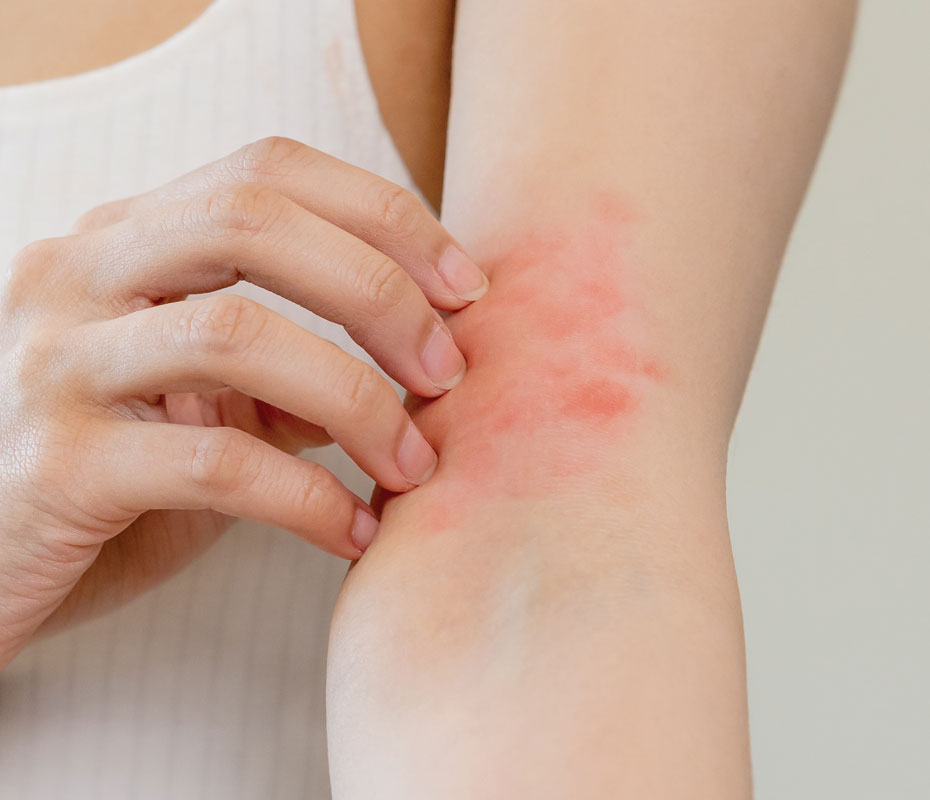
What Does Eczema Look Like? Itchy Skin
Eczema may present differently depending on the individual but often includes:
- Redness and dryness: Most common during early flares.
- Scaly or flaky skin: Especially on the hands, face, and legs.
- Cracked or split skin: Painful fissures, especially on fingers or heels.
- Blisters and weeping: Seen in more acute flares or specific subtypes like dyshidrotic eczema.
- Thickened areas: From chronic rubbing or scratching.
- Post-inflammatory colour changes: Lightening or darkening of the skin, more noticeable in people with darker skin tones.
How Can You Treat Eczema?
Eczema treatment focuses on calming inflammation, healing skin, relieving itching, and preventing recurrence.
Emollients (moisturisers):
The cornerstone of eczema care. Apply frequently — at least twice a day — and always after bathing. Greasier formulations are often more effective for very dry skin. Choose unperfumed products. Use emollients for washing as well.
Topical corticosteroids:
Used during flares to reduce inflammation. They come in different strengths. Mild steroids are used for the face and sensitive areas; stronger ones are used for the hands, feet, and body. Always use under medical guidance.
Topical calcineurin inhibitors (e.g., tacrolimus, pimecrolimus):
Steroid-sparing options for delicate areas or long-term maintenance. They may cause a temporary burning sensation on application.
Treatment of infection:
If the eczema is infected, a short course of oral or topical antibiotics may be needed. Antiseptic washes or creams may be advised.
Bandaging and wet wraps:
These can soothe the skin, reduce itch, and help topical treatments work better. They are particularly useful in children.
Phototherapy (UVB light):
Used for moderate to severe cases that don’t respond to creams. It is delivered in hospital by dermatology teams.
Systemic treatments:
In severe or unresponsive eczema, oral or injectable medications may be needed, such as ciclosporin, methotrexate, azathioprine, or biologics like dupilumab. These are prescribed and monitored by dermatologists.
The terms eczema and dermatitis are often used interchangeably. Both refer to inflammation of the skin.
- Eczema usually refers to chronic, itchy, inflammatory conditions like atopic eczema.
- Dermatitis is a broader term that includes all types of skin inflammation, including contact dermatitis, seborrhoeic dermatitis, and stasis dermatitis.
Essentially, eczema is a type of dermatitis, but not all dermatitis is eczema.

Thank you
Overall a disappointing experience, sterile and cold enough environment made bearable only by the maximalist decor. No serenity as portrayed in marketing features ie. Lack of music As a director within a private healthcare setting, very poor customer experience and not one I will be recommending to our own clientele.
I was advised if unhappy with results in 2 weeks to come back for a top up but work restrictions meant I did not attend for 4 weeks but was told that this was chargeable: disappointing again with lack of appreciation or flexibility for working professionals. No follow up provided or courtesy call as is often given at alternative aesthetic clinics.
Dr. Noy has been incredible from start to finish. It is a joy to go to this beautiful clinic, and care is second to none.


Receive regular updates and articles of interest regarding Montrose clinic and the world of aesthetics at large.
Newsletter Sign Up