
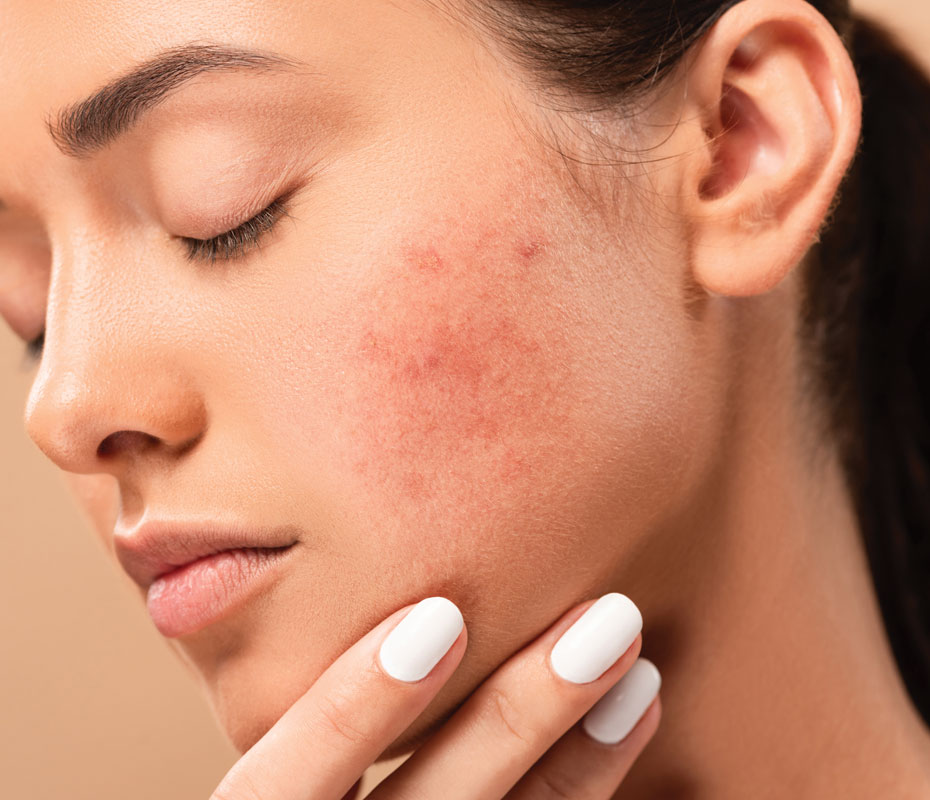
Acne Scarring
Acne scarring is a common skin condition that results from severe acne. These scars can be permanent and often lead to discolouration, texture changes, and indentations in the skin. Acne scars can affect one’s self-esteem and confidence. Acne is the most common skin condition in the world.
What Is Acne Scarring?
Acne scars develop when the skin’s healing process after an acne breakout is disrupted. This disruption can be due to a variety of factors, including the severity of the acne, the skin’s natural healing response, and external influences such as picking or squeezing pimples.
Acne scarring is usually an after-effect of cystic acne or inflamed blemishes. The healing process involves the production of collagen, and an imbalance in collagen production can lead to different types of scars. Atrophic scars are a common type of acne scar characterized by a loss of tissue, leading to indentations in the skin.
Characteristics of Acne Scarring:
- Indentations: Depressed scars that sit below the surrounding skin. These are often caused by a loss of tissue and can be challenging to treat.
- Raised Scars: Elevated, firm scars that sit above the skin’s surface. These occur when the skin produces too much collagen during the healing process.
- Discolouration: Dark spots or red marks left after an acne lesion heals. This is often referred to as post-inflammatory hyperpigmentation and can vary in intensity depending on one’s skin tone. Discoloration left behind after a zit has cleared is not considered a scar.
How Can You Treat Acne Scarring?
There are various treatments available to reduce the appearance of acne scars and improve skin texture. Here is an overview of common treatments:
Non-Surgical Treatments:
- Sciton BBL: Broadband light therapy that targets pigmentation and improves skin tone.
- Sciton HALO: A hybrid fractional laser that resurfaces the skin, reducing scars and improving texture.
- Morpheus8: Combines microneedling with radiofrequency to stimulate collagen production and improve skin texture.
- SkinPen: A microneedling device that promotes collagen production to reduce the appearance of scars.
- Sciton Profractional: A fractional laser that treats deep into the skin, encouraging new collagen growth.
- Sciton Contour TRL: A resurfacing laser that removes the top layer of skin, allowing new, healthier skin to form. Microneedling makes collagen as the skin heals from the punctures.
- Subcision: A minor surgical procedure used to treat depressed scars by breaking up scar tissue.
- Dermabrasion: A procedure that uses a rotating instrument to remove the outer layers of skin, improving the appearance of scars.
- Profhilo: An injectable treatment that hydrates and remodels the skin, enhancing its overall appearance.
Surgical Treatments:
- Surgical Excision: Involves the surgical removal of deep acne (‘ice pick’) scars.
Related conditions
What to expect
- 30-Minute Consultation With a Dermatologist or Plastic Surgeon
- Proprietary triage system guaranteeing referral to the most suitable practitioner
- Treatment at Montrose London: A leading specialist in skin aesthetics and plastic surgery.
- Dedicated Patient Coordinator: A personal point of contact throughout your journey at Montrose London.
- Comprehensive Post-Treatment Aftercare: With our expert doctors and aestheticians.

Thank you
Overall a disappointing experience, sterile and cold enough environment made bearable only by the maximalist decor. No serenity as portrayed in marketing features ie. Lack of music As a director within a private healthcare setting, very poor customer experience and not one I will be recommending to our own clientele.
I was advised if unhappy with results in 2 weeks to come back for a top up but work restrictions meant I did not attend for 4 weeks but was told that this was chargeable: disappointing again with lack of appreciation or flexibility for working professionals. No follow up provided or courtesy call as is often given at alternative aesthetic clinics.
Dr. Noy has been incredible from start to finish. It is a joy to go to this beautiful clinic, and care is second to none.


Receive regular updates and articles of interest regarding Montrose clinic and the world of aesthetics at large.
Newsletter Sign Up