
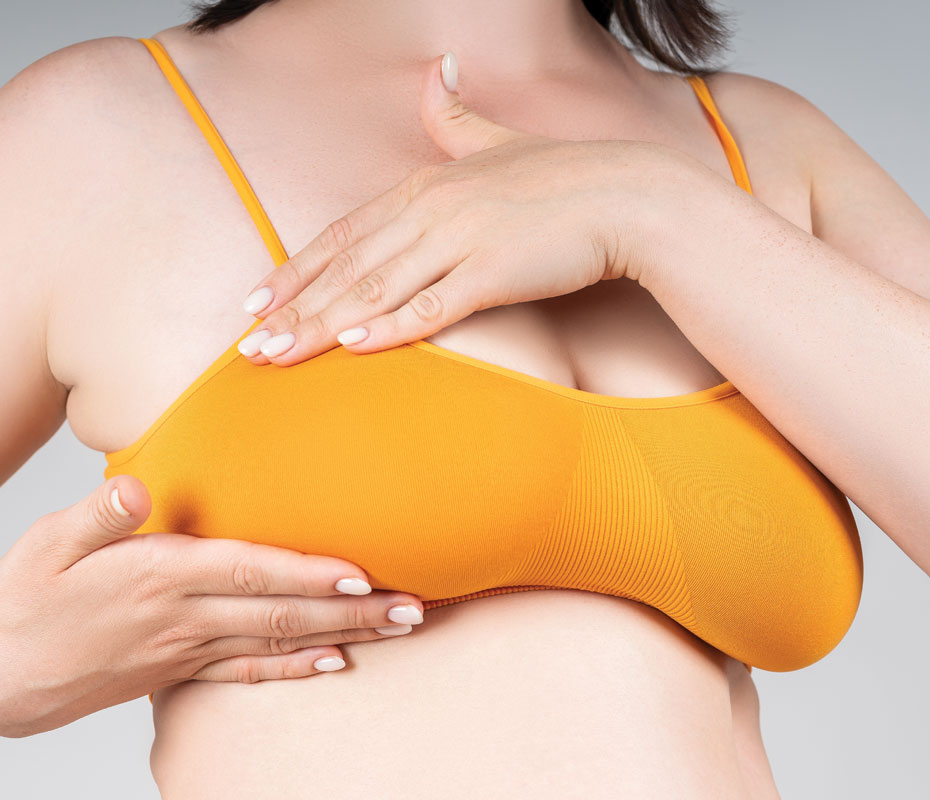
Droopy Breasts
Droopy breasts, also known as breast ptosis, is a condition where the breasts sag and lose their firmness and shape. It can be caused by a number of factors including aging, genetics child-birth, and weight fluctuation.
Droopy breasts are completely normal and part of the natural changes in a woman’s body. However, for those looking to lift their breasts, there are various options available.
What Causes Droopy Breasts?
Several factors can contribute to droopy breasts, including:
- Ageing causes a natural loss of skin elasticity through a loss of collagen and elastin, leading to skin that is less firm and supple. This reduction in skin elasticity can cause the breast tissues, including connective tissue, to lose their support, resulting in sagging. Additionally, the hormonal changes associated with menopause can further impact the breast tissues.
- Weight Fluctuations can stretch the skin and ligaments. When a person gains weight, the skin and connective tissues expand. Conversely, when losing weight, the skin may not retract fully, leaving excess skin and contributing to sagging. Rapid weight loss in particular, can exacerbate this effect, as the skin does not have enough time to adjust to the new body shape.
- Pregnancy and Breastfeeding typically cause breast tissue to expand. During pregnancy, increased levels of hormones such as estrogen and progesterone prepare the breasts for lactation, often leading to an increase in breast size. After breastfeeding, the breasts may decrease in volume, and the stretched skin and ligaments may not return to their pre-pregnancy state, which can result in drooping breasts.
- Gravity constantly exerts a downward force on the breasts, which contributes to stretching of the skin and connective tissues over time. This effect is more pronounced in larger breasts.
- Genetics can influence the size and shape of breasts and the tendency for them to sag. Genetic factors determine the skin’s elasticity, breast size, and the strength of the connective tissues, all of which play a role in how the breasts change over time. Some women may naturally have less elastic skin or weaker connective tissues, making them more prone to sagging. Additionally, family history can provide insight into the likelihood of experiencing breast sagging as one ages.
Understanding these causes can help in taking proactive steps to maintain breast firmness and delay sagging. Lifestyle changes, such as maintaining a healthy weight, wearing supportive bras, and avoiding smoking, can contribute to better skin health and elasticity, potentially reducing the impact of these factors on breast sagging.
Characteristics of Breast Ptosis
- Sagging Appearance: Breasts hang lower on the chest. This can be more noticeable in larger breasts due to the additional weight, which can exacerbate the pull of gravity over time. The sagging appearance can also result from the skin losing its elasticity, a common occurrence with aging and after pregnancy, breast feeding and significant weight fluctuations.
- Loss of Firmness: Breasts can feel less firm- this change in firmness is often due to the involution (reduction) of glandular tissue and infiltration of fat secondary to hormonal changes and the stretching of connective tissue
Stretched Skin: Skin around the breasts can appear stretched or loose. This is often a result of rapid weight loss or post-pregnancy changes, where the skin does not retract completely after being stretched. - Low-Set Nipples: A classically youthful position of the nipples is above the level of the crease underneath the breast. Nipples may sit at the level of the lower crease or lower yet, occasionally pointing downward instead of forward or upward. This characteristic is a common indicator of breast ptosis and can be influenced by the degree of sagging. In some cases, surgical interventions like a breast lift can reposition the nipples for a more youthful appearance.
Understanding these characteristics can help in identifying droopy breasts and exploring appropriate solutions to address personal concerns. While these changes are a natural part of aging and life events, many women seek ways to maintain or restore their breast shape and firmness through lifestyle changes, supportive bras, or medical procedures.
How Can You Treat Droopy Breasts with A Breast Lift?
- Breast Lift (Mastopexy): Surgical procedure to lift the position of the nipple-areola complex and reshape sagging breasts by removing excess skin and tightening surrounding tissue. This procedure is particularly beneficial for women experiencing significant breast sagging due to aging, weight loss, or post-pregnancy changes. It can help restore a more youthful breast contour and improve overall breast firmness.
- Breast Augmentation: Breast augmentation is not only about increasing size but also improving the overall symmetry and contour of the breasts. The procedure involves placing breast implants either above or below the chest muscles, depending on the desired outcome and the surgeon’s recommendation. For those concerned about sagging breasts, for milder cases a breast agmentation alone, and in more severe cases combining breast augmentation with a breast lift can provide even more dramatic results, ensuring that the breasts are positioned higher on the chest wall and have a more youthful appearance.
- Lipofilling: A procedure that involves transferring fat from another part of the body to the breasts to enhance their size and shape. Lipofilling is a more natural approach to fix saggy breasts, using the patient’s own fat cells to achieve a modest increase in breast volume. It is unlikely to change the position of the nipple areola complex and therefore is better suited to patients who re happy with the existing position of the nipples. It can also help improve breast symmetry and shape, making it a popular choice for those seeking subtle enhancements.
- Combination Procedures: Combining a breast lift with implant or fat augmentation for optimal results. This approach allows for a comprehensive transformation, addressing both the sagging and volume concerns in one surgery. By tailoring the procedure to the individual’s needs, a combination approach can provide a more balanced and aesthetically pleasing outcome, enhancing both the size and shape of the breasts.
What to expect
- 30-minute consultation with a Plastic Surgeon
- Proprietary triage system guaranteeing referral to the most suitable practitioner
- Treatment carried out at Montrose London, a leading specialist skin aesthetics and plastic surgery clinic
- Dedicated Patient Coordinator as a personal point of contact throughout your journey at Montrose London
- Comprehensive post-treatment aftercare with our expert doctors and aestheticians

Thank you
Overall a disappointing experience, sterile and cold enough environment made bearable only by the maximalist decor. No serenity as portrayed in marketing features ie. Lack of music As a director within a private healthcare setting, very poor customer experience and not one I will be recommending to our own clientele.
I was advised if unhappy with results in 2 weeks to come back for a top up but work restrictions meant I did not attend for 4 weeks but was told that this was chargeable: disappointing again with lack of appreciation or flexibility for working professionals. No follow up provided or courtesy call as is often given at alternative aesthetic clinics.
Dr. Noy has been incredible from start to finish. It is a joy to go to this beautiful clinic, and care is second to none.


Sign up to our newsletter
Receive regular updates and articles of interest regarding Montrose clinic and the world of aesthetics at large.
Newsletter Sign Up